

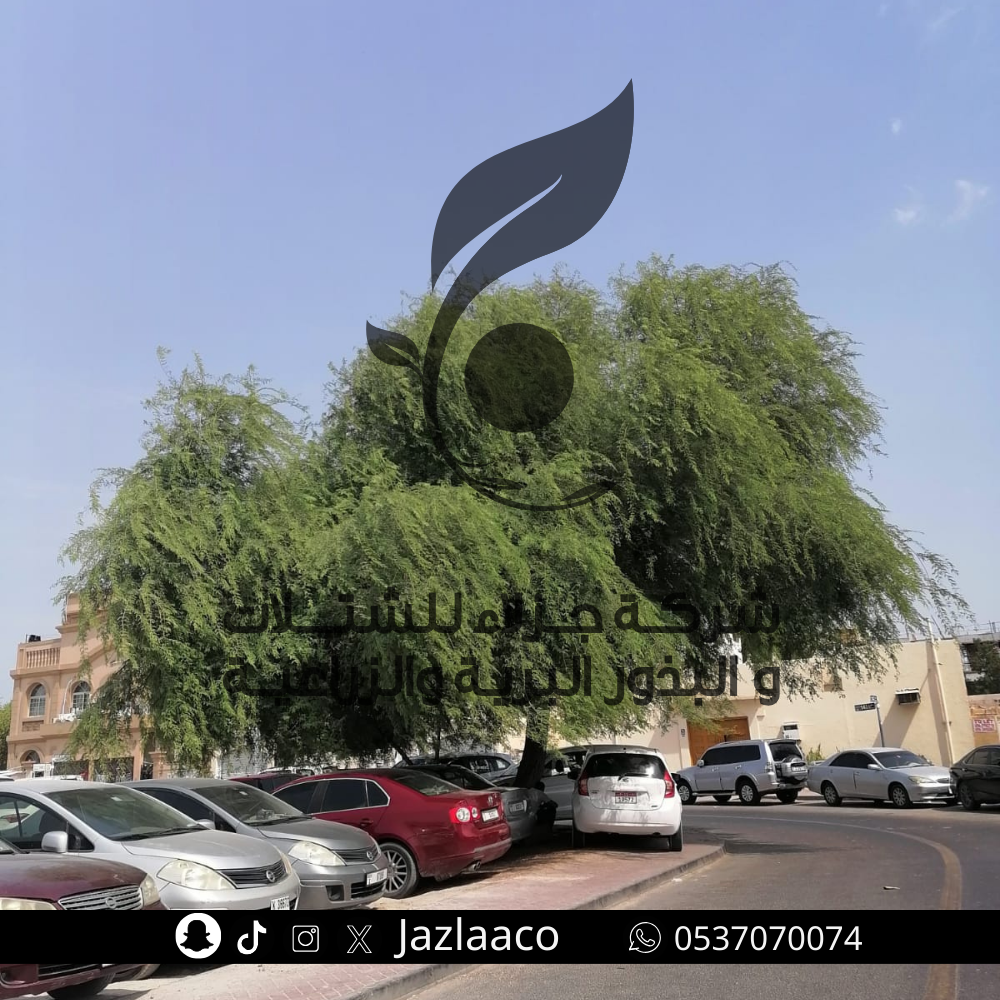
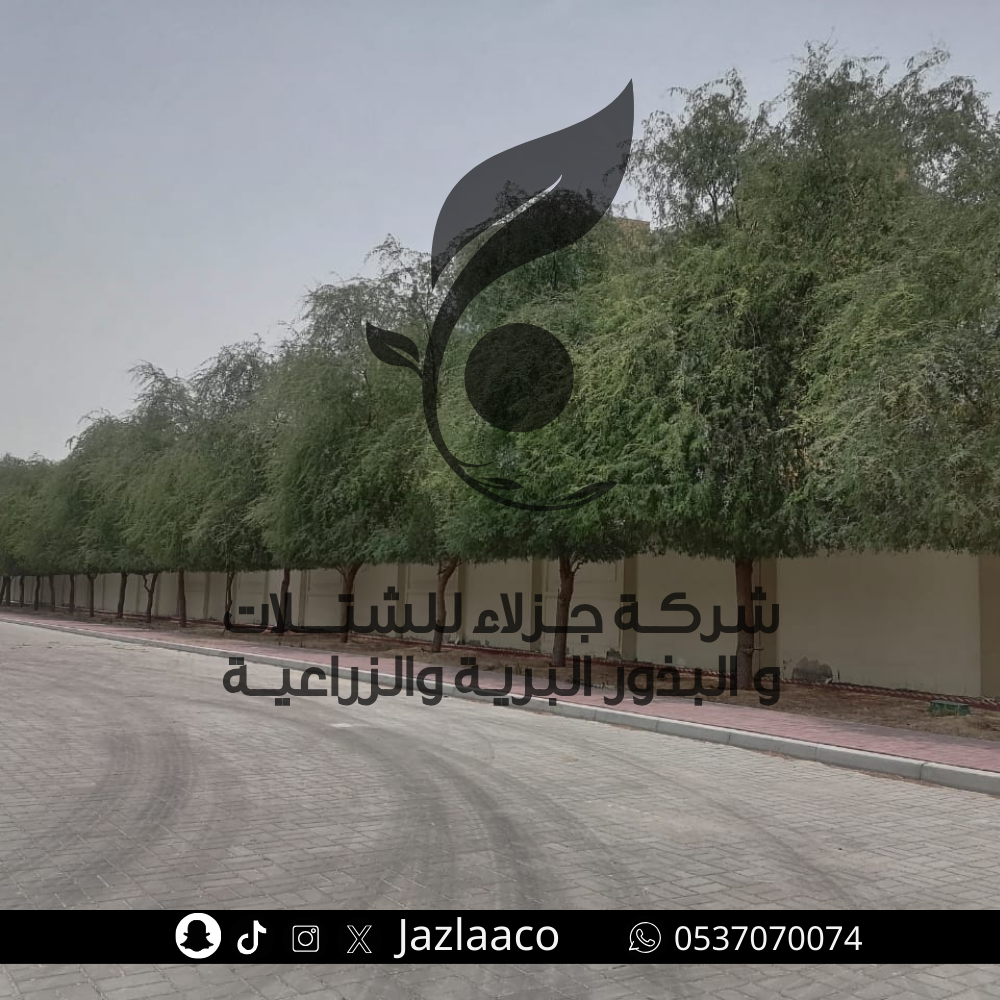
A thorny tree that reaches a height of (8 m). This tree grows naturally in the Rajasthan region of India, the Sindh region of Pakistan, and even in southern India, including Iran and southeastern Arabia. The stem is solitary, gray in color, and longitudinally cracked. The leaves are compound, pinnate, double, (8 cm) long, and have (1-3 pairs) of pinnate leaflets, and (6-12 pairs) of small leaflets. They are dark green in color. The thorns are small (0.5 cm), almost triangular in shape, and brown in color. The flowers are yellow in spike inflorescences (2-6 cm). The fruits are pods (20-30 cm) long and (1 cm) wide, pointed at the end, and brown in color (not hard like the fruits of other Prosopis species). The seeds are brown in color.
Flowering
Flowering begins in late March. Fruits set a month after flowering. Flowering period is three months. Fruits are harvested.
At the beginning of June.
multiply
Propagation is done by treating the seed by pouring boiling water over it and leaving it to soak for a period of (24 hours). It can be treated
Seed with sulfuric acid.
Benefits and Uses
A tree that tolerates severe drought. It is used to make windbreaks, in green belts, afforestation, sand stabilization, and all types of desert afforestation. The wood is used in agricultural tools, fuel, and charcoal production. The wood is hard but not durable.
The pods contain a high percentage of protein (30%). They and the leaves are used during drought and the lack of green fodder to feed animals. It has medical benefits in treating bronchial asthma, leprosy, indigestion, and rheumatism. Its flowers are valuable in honey production.